Software that performs where the operation actually happens: on the warehouse floor.
Custom WMS, barcode scanning workflows, carrier management, and real-time multi-site inventory, built for the floor, where a slow scan or a wrong pick costs money by the hour.
WMS and logistics platforms deployed across 3 regions.
45%of pick-error cost is addressable once confirmation happens at the shelf instead of at the customerModelled — see the return below
WMS and logistics platforms deployed across 3 regions.
Why Generic Software Fails Logistics & Warehouse Operations
Warehouse software is judged on the floor, not in a demo. Real operations need instant scanning, offline tolerance when WiFi drops mid-shift, multi-site inventory that's actually accurate, cross-docking, cycle counts, wave and zone picking, and carrier management that doesn't require a person to manually compare rates.
Off-the-shelf systems tend to assume a single site, a stable connection, and a picking pattern that matches their default workflow. The moment reality diverges (a second warehouse, an intermittent scanner connection, a peak-season picking surge), the software becomes the bottleneck instead of the tool.
DevExcel builds WMS, inventory, and carrier systems for the operation you actually run: offline-first scanning that doesn't stall when the network does, inventory that's the same true number across every site, and picking logic tuned to how your floor actually moves.

Inventory counts are never actually real-time
Stock numbers lag behind what's physically on the floor, and every discrepancy costs someone time to chase down.
Scanning breaks the moment WiFi drops
A dead zone on the floor shouldn't mean a picker stops working, but with most systems, it does.
Picking paths waste hours a day
Slotting that ignores which SKUs actually move fastest turns picking into unnecessary walking, shift after shift.
Carrier selection is manual and overpays
Rate shopping by hand across carriers rarely finds the actual best option for cost, speed, and reliability on every shipment.
Multi-site stock has no single source of truth
Different warehouses reporting different numbers for the same SKU makes fulfillment decisions a guessing game.
What changes when Logistics & Warehouse software is built around the operation
BeforeA wrong item is discovered by the customer, which makes it a return, a credit and a rating.
AfterScan-to-confirm rejects the wrong item at the shelf, before it is packed.
BeforeStock discrepancies surface at the physical count rather than when they happen.
AfterStock movements are written as they occur, so the ledger and the shelf agree.
BeforeEach carrier is booked by hand in its own portal, and tracking lives in six places.
AfterCarrier booking, labelling and tracking run from one dispatch workflow.
BeforeSlotting was set once and never revisited, so the fastest-moving lines sit furthest from packing.
AfterSlotting responds to actual demand data and is re-evaluated on a cycle.
What that is worth in a year
| Value driver | How it is calculated | Annual value |
|---|---|---|
| Pick error cost avoided | 400 orders × 3 lines × 2% error × $25 × 260 days × 45% addressed | $70,200 |
| Carrier booking time recovered | 400 shipments/day × 260 days × 30% booked by hand × 7 minutes saved × $22/hr | $80,080 |
| Stock reconciliation effort | 3 hrs/night × 260 nights × $22 loaded cost | $17,160 |
| Total annual value | $167,440 | |
| Implementation cost | $110,000 |
Payback period: under 8 months
First-year return on the modelled figures: 52%
Figures are modelled from the reference operation above using our delivery experience, not measured from a client engagement. Order profile, error rate and the true cost of a return vary by operation. Treat this as a way to size the opportunity, not as a result we are committing to.
How these figures were built
Reference operation: A distribution operation dispatching 400 orders a day across 3 lines per order, running a 2% pick error rate at $25 to resolve each error, over 260 operating days.
Modelled over a 12-month period on the reference operation stated above. The carrier line assumes only the 30% of shipments still booked by hand are addressable — an operation already batch-labelling most of its volume should expect that line, and the total, to be smaller.
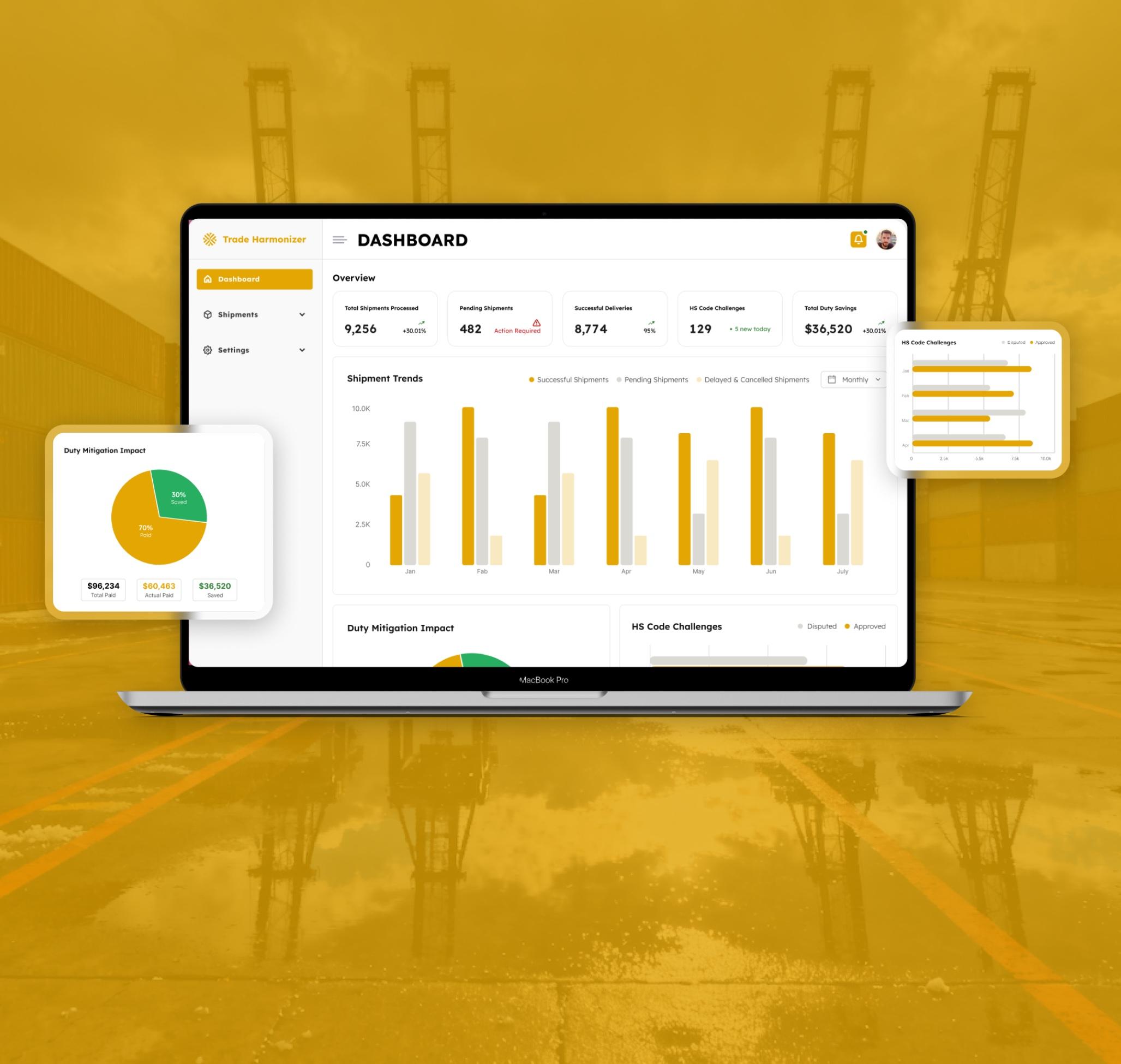
Logistics & Warehouse — Trade Compliance Platform
A UK customs compliance platform combining HS code lookup, sanctions screening, and live regulatory updates, live in production.
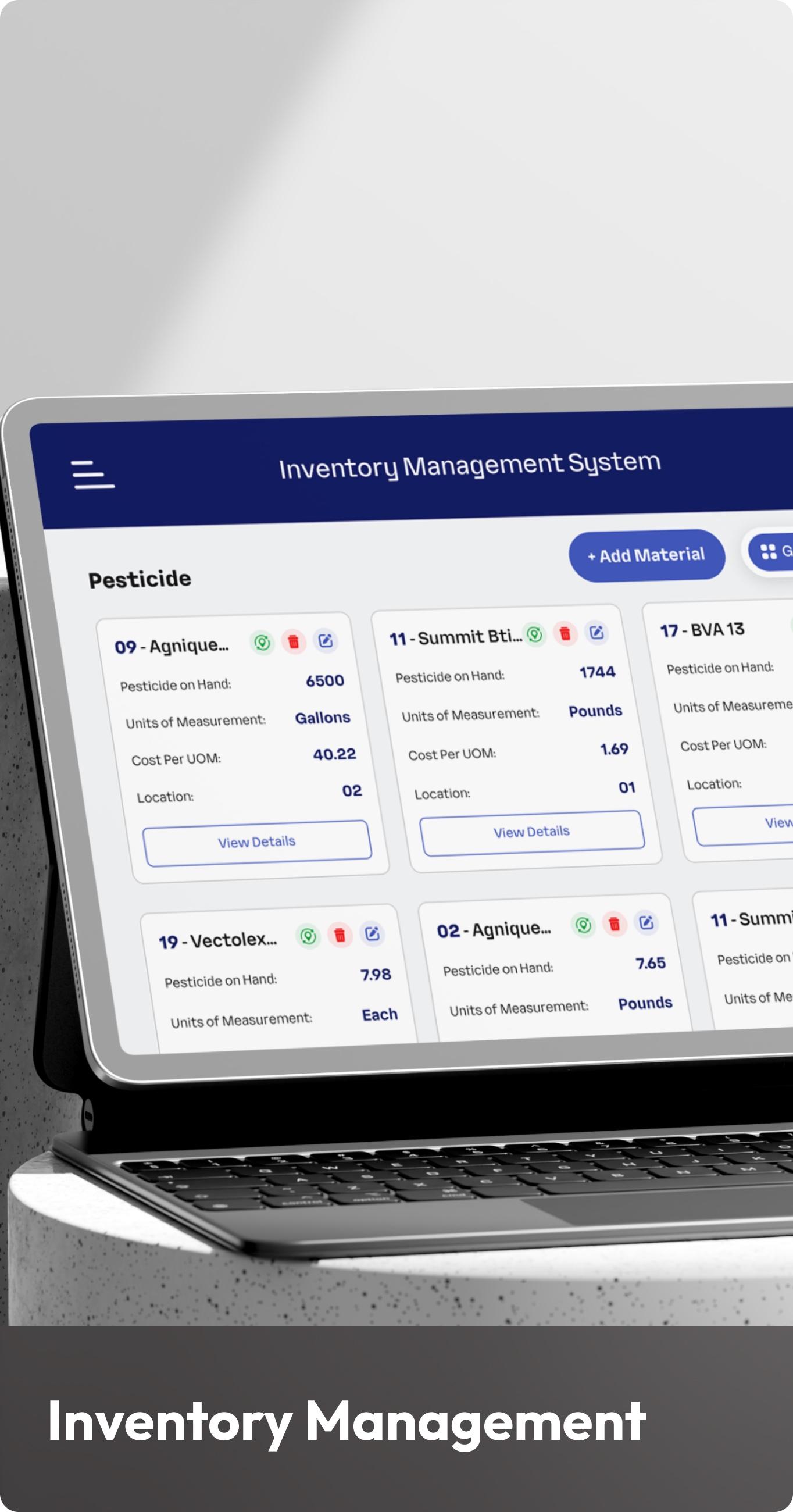
Logistics & Warehouse — Inventory Management System
An internal inventory portal replacing paper-based stock records, tracking intake, allocations, and usage history from one dashboard.
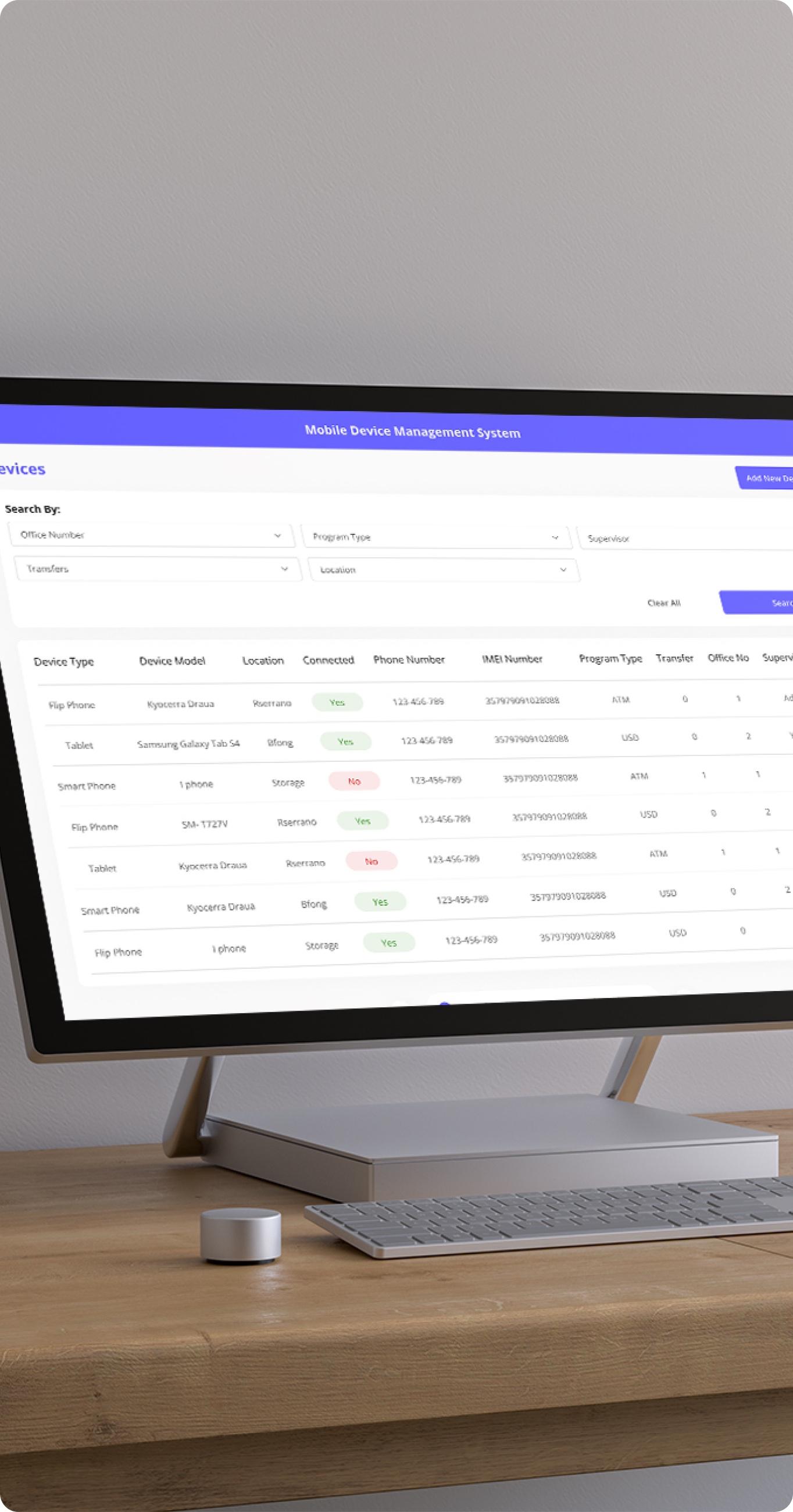
Logistics & Warehouse — Device & Asset Tracking System
A centralized asset portal tracking company hardware, device assignments, paired SIM cards, and inter-branch transfers in real time.
Custom WMS
A warehouse management system built around your actual layout, SKUs, and picking process.
Offline-first barcode scanning
Scanning workflows that keep working through a dead zone and sync the moment connectivity returns.
Real-time multi-site inventory
One true stock number per SKU, visible and accurate across every site at once.
Wave & zone picking
Picking logic organized around how your specific floor and order volume actually move.
Carrier management & rate shopping
Automated carrier comparison across cost, speed, and reliability for every shipment.
Inbound, ASN & cycle counting
Structured inbound and cycle-count workflows that keep inventory accuracy from drifting.
AI is not a feature we bolt onto an existing workflow.
It's part of how DevExcel designs, reasons through, automates, monitors, and improves industry software.
Demand-aware slotting
AI positions fast-moving SKUs closer to pack stations to shorten pick paths, instead of a static slotting map set once and never revisited.
Predictive inventory & reorder
Forecasts demand per site and helps prevent stockouts without piling up excessive safety stock as a hedge.
Intelligent carrier selection
AI evaluates cost, speed, and reliability for each shipment instead of defaulting to the same carrier out of habit.
Warehouse operators
Operators running one or more physical sites where picking speed and inventory accuracy directly hit the bottom line.
Logistics software founders
Founders building a logistics or warehouse SaaS product who need real engineering depth on the WMS core.
Freight forwarders
Forwarders managing carrier relationships and shipment visibility across multiple clients and routes.
Scanning is offline-first. Pickers keep working through a dead zone, and every scan syncs automatically the moment connectivity returns, so a network gap never stops the floor.
Yes. Multi-site inventory is built around one true stock number per SKU, visible and consistent across every location instead of each site reporting its own number.
It positions fast-moving SKUs closer to pack stations based on real demand data, and re-evaluates over time instead of relying on a static slotting map set once and left alone.
Yes. Carrier management is built to compare and select across the carriers and contracted rates you already have, not a closed system that forces a carrier switch.
Wave and zone picking logic is built around your actual order volume patterns, including peak periods, so picking throughput is planned for the spike, not just the average day.
It depends on the number of sites and integrations involved. We scope a fixed timeline during the discovery call based on your actual warehouse layout and existing systems.
Don't see your question? Let's talk.
Building in Logistics & Warehouse?
Let's talk about your project.
30 minutes. We'll discuss your specific challenge, show relevant work, and tell you honestly what we'd build.